January is the quietest month in the wedding calendar and one of the best for flowers. The holiday rush is over, the Valentine's Day spike hasn't started, and winter has its own short list of stems that look better now than at any other time of year.
This plate covers what is in season for a January or winter wedding, the colors that work, the foliage that does the heavy lifting, and what to avoid if you want your budget to go further. Availability varies by region and grower, so treat it as a starting list for the conversation with your florist.
The January shortlist
- Amaryllis. The classic winter flower, in season roughly October to April. Huge trumpet blooms on tall hollow stems in red, white, blush and striped forms. One stem carries a centerpiece.
- Anemone. The most reliable January choice. Papery petals around a dark center give a modern, graphic look in bud vases and garden style bouquets alike.
- Hellebore. The winter rose, in dusty mauve, dark plum, speckled white and antique green. Buy mature stems with seed pods forming; young hellebores wilt fast once cut.
- Tulips. Winter is peak tulip supply from greenhouse growers. They keep growing in the vase and bend toward light, which florists use for movement.
- Paperwhites. Narcissus with a strong scent and tiny white star flowers. Their sap shortens the life of other cut flowers, so condition them on their own first.
- Ranunculus. Layered petals in every color. Most American supply starts in late winter as the California season opens, so January availability depends on your grower.
- Carnations and camellias. Carnations are the January birth flower and come in muted antique tones now; camellia blossoms and glossy leaves suit low centerpieces.
| Flower | Look | Best use | Watch out for |
|---|---|---|---|
| Amaryllis | Large trumpets, bold color | Centerpieces, altar urns | Heavy heads; stake tall stems |
| Anemone | Dark eye, papery petals | Bouquets, bud vases | Closes in the dark, opens in light |
| Hellebore | Nodding, muted tones | Bouquets, low arrangements | Buy mature stems only |
| Tulip | Soft cups, curving stems | Bouquets, loose centerpieces | Keeps growing in water |
| Paperwhite | Small white stars, scent | Table accents, aisle jars | Sap harms other stems |
| Ranunculus | Tight layered petals | Bouquets, boutonnieres | Supply varies in January |
Winter foliage and texture
A winter arrangement leans on greenery more than a summer one. Cedar, fir and pine bring scent and a dark base; eucalyptus in silver dollar or seeded form softens it; magnolia leaves add a glossy bronze back. For color, ilex berries (winterberry) and hypericum give red and burgundy dots that last for days, and dusty miller adds a frosted silver edge without looking like a holiday wreath.
Field note: keep it a wedding, not Christmas
Evergreens, red berries and pinecones read as holiday decor very quickly. If your wedding is mid January, swap red berries for white or burgundy, use eucalyptus over pine near the bouquet, and keep pinecones off the tables.
Colors that work in January
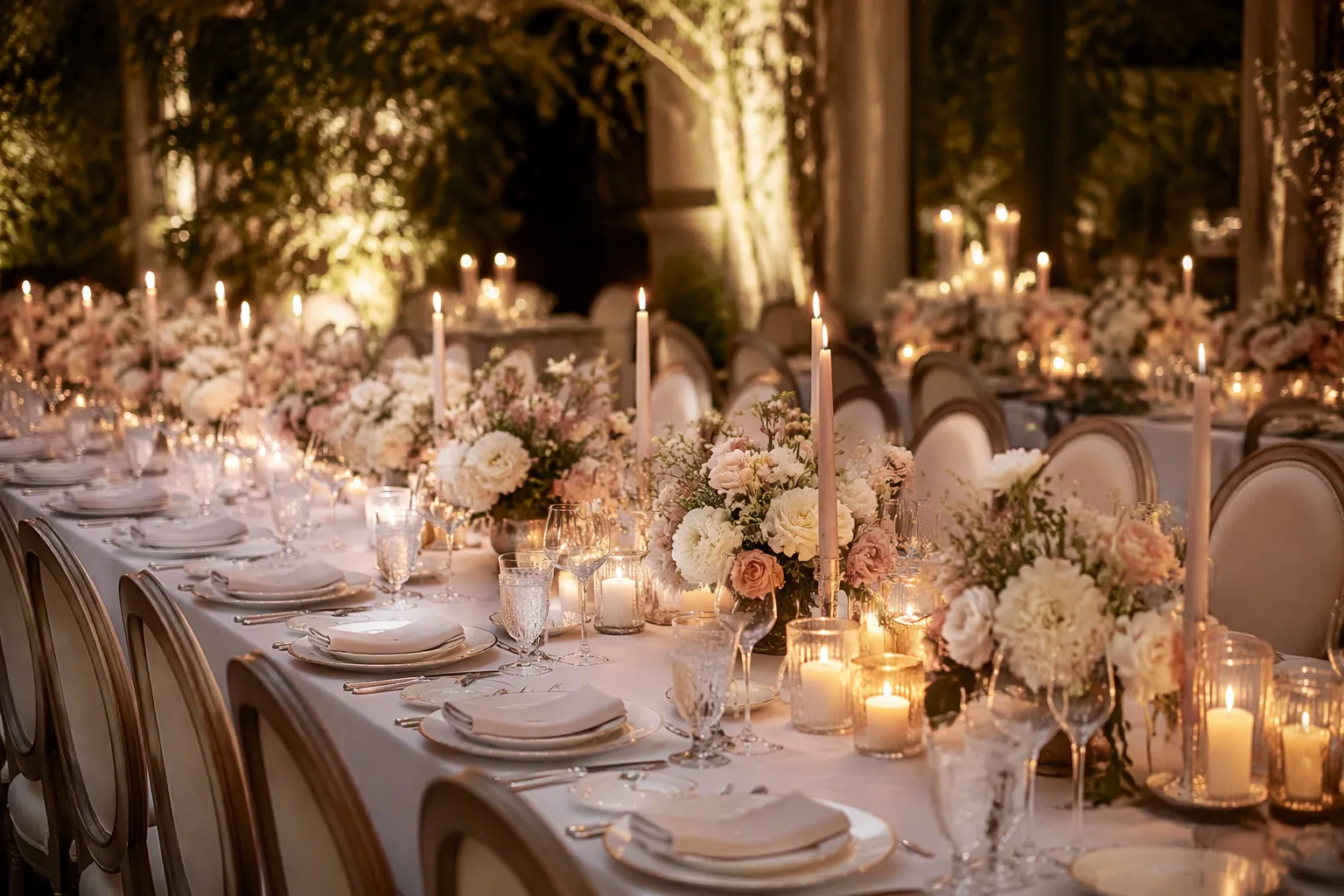
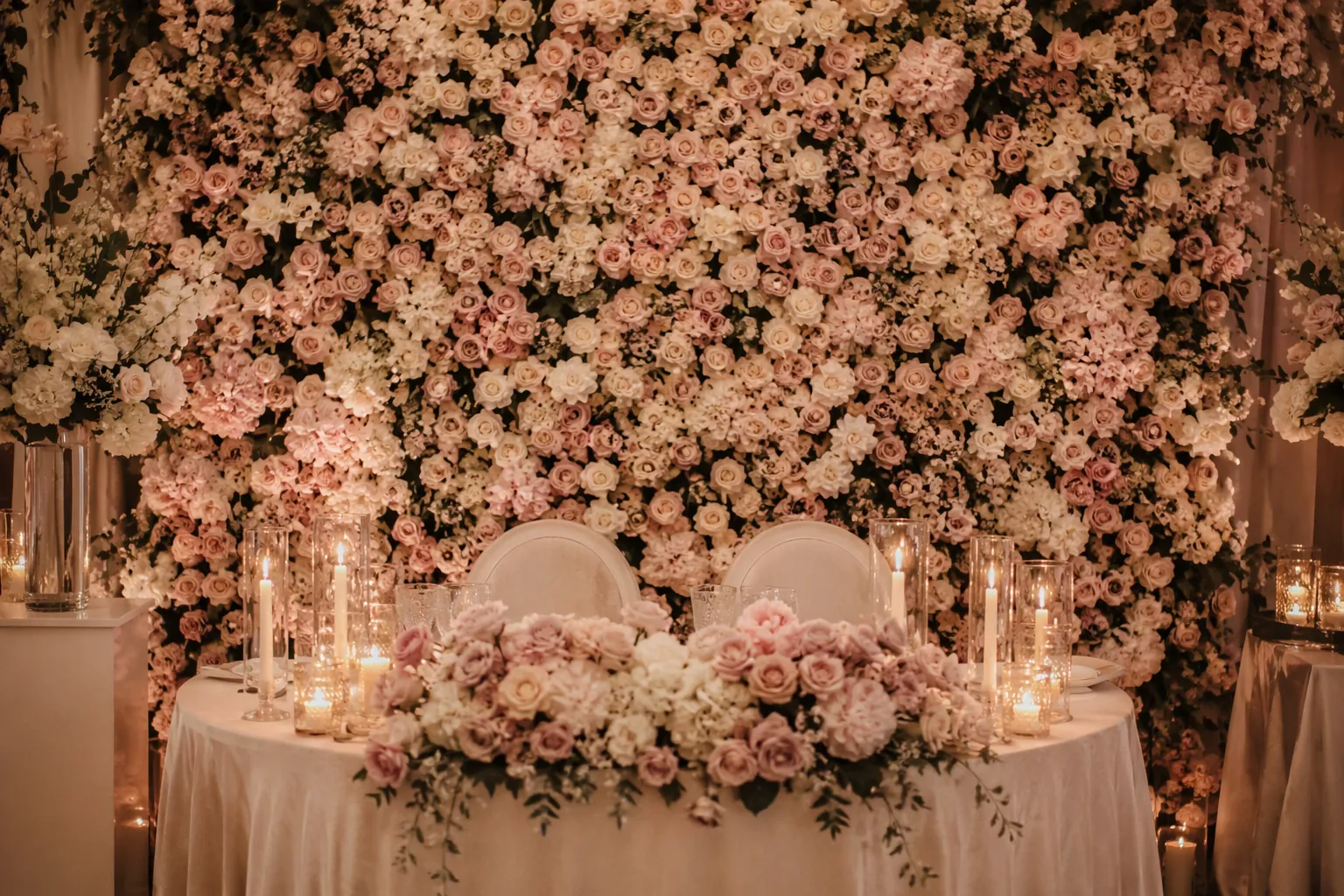
Four palettes come up again and again. Burgundy and dark red with dark foliage feels warm in candlelight. Ivory and white with a lot of green is the classic winter look, and anemones keep it from going flat. Jewel tones such as emerald, sapphire and plum suit evening receptions. Blush with gold works for daytime and photographs softly in low winter light. Choose warm whites over bright whites; they look better under indoor lighting.
Getting the most from a January budget
Seasonal stems are the obvious saving. Peonies and garden roses in January are imported and priced to match, while amaryllis and tulips are at their best. Book your florist well before February: rose prices climb steeply in the run up to Valentine's Day, so a late January wedding that leans on roses can cost more than one that doesn't. Our 100 guest flower budget shows where the money goes line by line.
Marrying somewhere warm in January instead? It is dry season across much of Southeast Asia and the Caribbean, and the rules change completely: see tropical wedding flowers that survive the heat.
Winter flowers are fewer, but they are better. Build the design around four or five seasonal stems and let the greenery carry the rest.
Pl. 09, working noteFrequently asked questions
Amaryllis, anemones, hellebores, tulips and paperwhites are all in season or widely grown in January, with ranunculus arriving toward the end of the month. Add evergreens, eucalyptus and berries for texture.
The carnation and the snowdrop are the two traditional January birth flowers. Carnations work well in weddings: they are cheap, last for days and now come in muted, antique colors.
In the U.S., January's seasonal list centers on amaryllis, anemone, hellebore, tulip, paperwhite narcissus and camellia, plus imported staples such as roses and orchids that are available all year.
Rich reds and burgundy, ivory and white with plenty of green, jewel tones such as emerald and navy, or soft blush with gold. Winter light is low and cool, so warmer whites photograph better than bright white.
Sources & further reading
- The Knot: wedding flowers by season: month by month availability
- The Bouqs Co.: winter wedding flowers: amaryllis season and winter varieties
- Native Poppy: favorite winter wedding flowers: hellebores and winter palettes