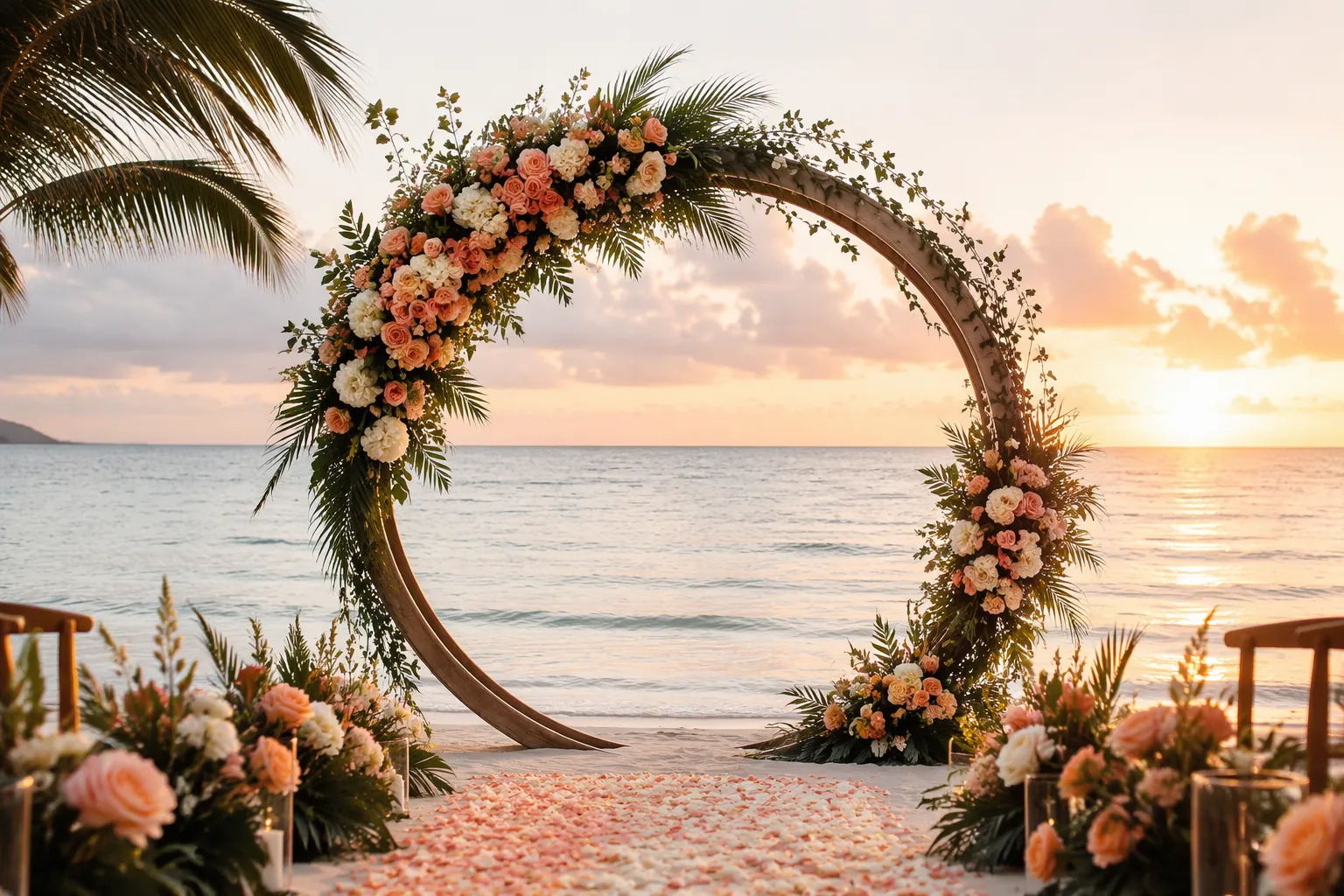
Every summer, somewhere, a hydrangea dies at a wedding. Often before the ceremony starts. This article exists so it isn't yours.
Outdoor weddings in warm climates (a July garden in Texas, a clifftop in Bali, a beach in Phuket) put flowers under conditions no temperate bloom is built for. Direct sun, 30°C plus air, humidity that swings between sauna and sea breeze: the wrong stems will show stress within the hour, and photographs last forever. The good news is that the plant kingdom solved this problem long ago. Tropical species carry waxy cuticles, woody stems and water storing tissue precisely because they grow in exactly these conditions. Choosing them isn't a compromise. It's using the right tool.
Why temperate flowers fail outdoors
Most classic wedding flowers (hydrangeas, peonies, gardenias, sweet peas) are creatures of cool European springs. Their petals are thin, their stems are thirsty, and their water loss in direct sun outpaces anything a cut stem can replace. Florists have a shorthand for the casualty order: hydrangeas go first, often collapsing out of water in under an hour; gardenias bruise brown at a touch, let alone a hug; peonies, already open, blow apart and shed in heat. None of this is a quality problem. It's physics.
That doesn't mean a hot climate wedding must look like a resort lobby. It means the brief changes: choose species built for the conditions, and use temperate blooms only where air conditioning and water tubes can protect them.
The starting five
If you remember nothing else, remember these. All five will survive a full event day in tropical heat and still photograph crisply at midnight.
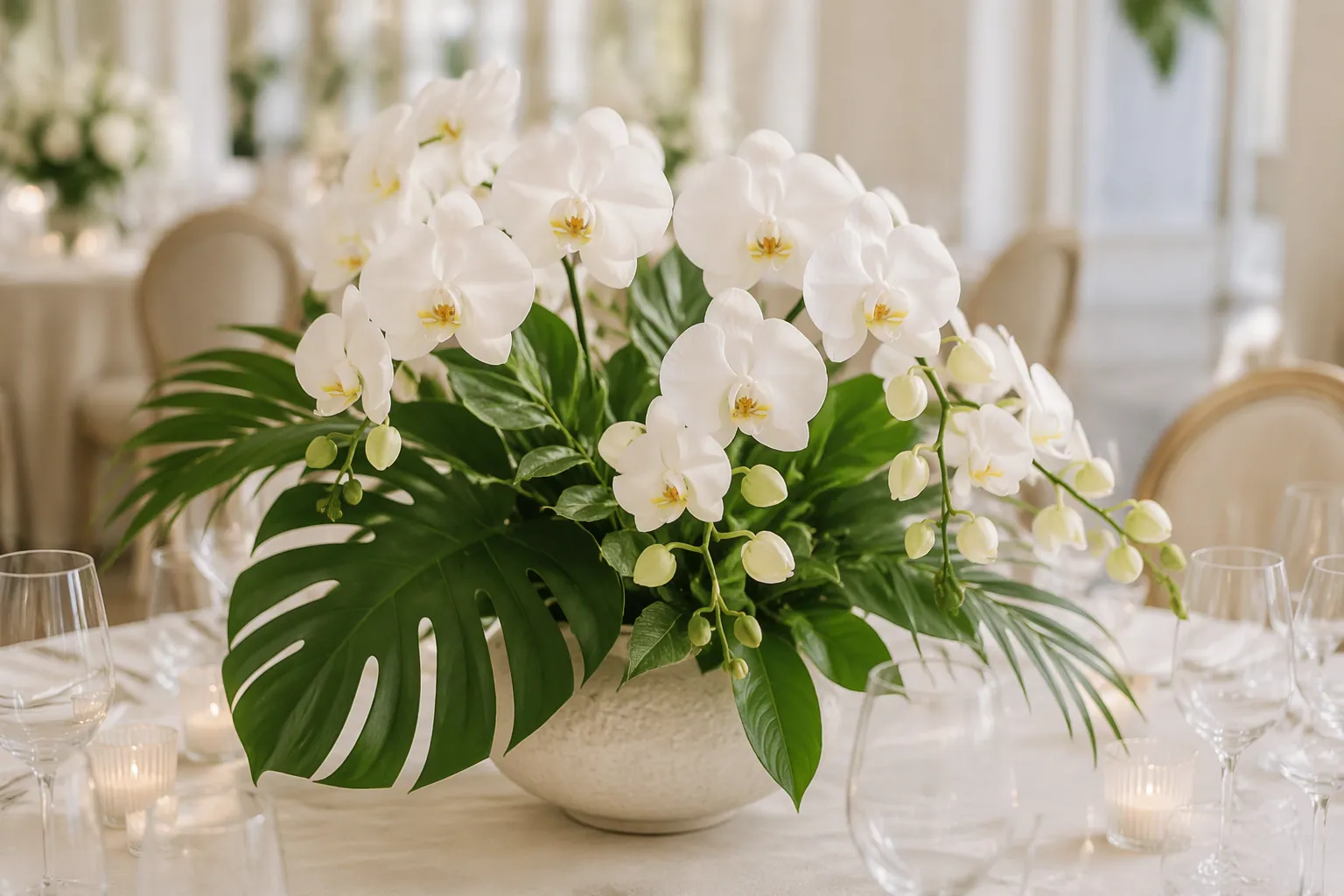
- Orchids (phalaenopsis, cymbidium, dendrobium). Waxy petals, weeks of vase life, and a stem architecture florists can build almost anything from. Phalaenopsis reads modern and minimal; cymbidium brings color and bulk; dendrobium comes by the hundred for garlands and scattering.
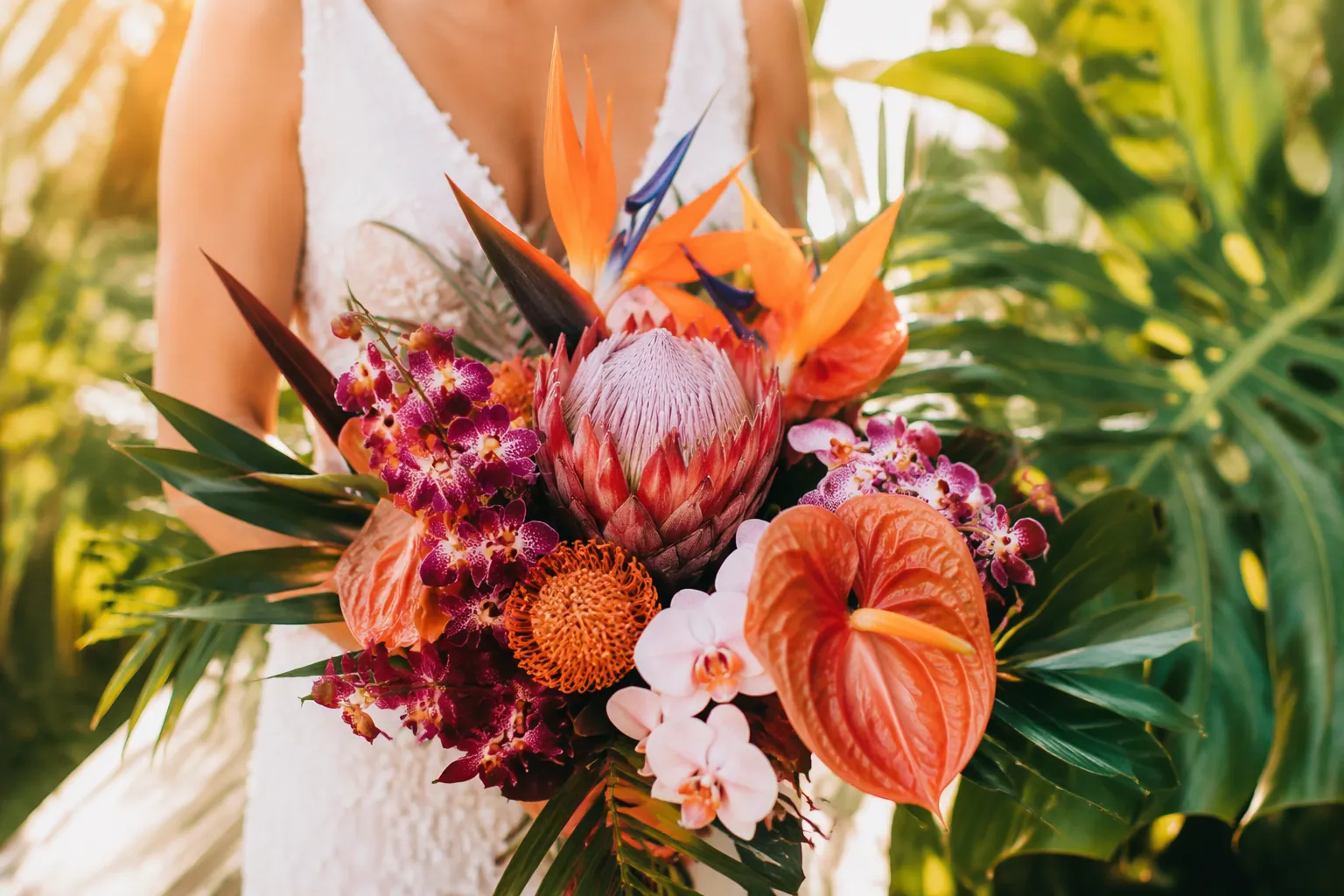
- Anthurium. The lacquered, heart shaped spathe is practically plastic in its durability: florists joke that anthurium doesn't die, it just eventually gets dusty. Superb for editorial, sculptural arrangements.
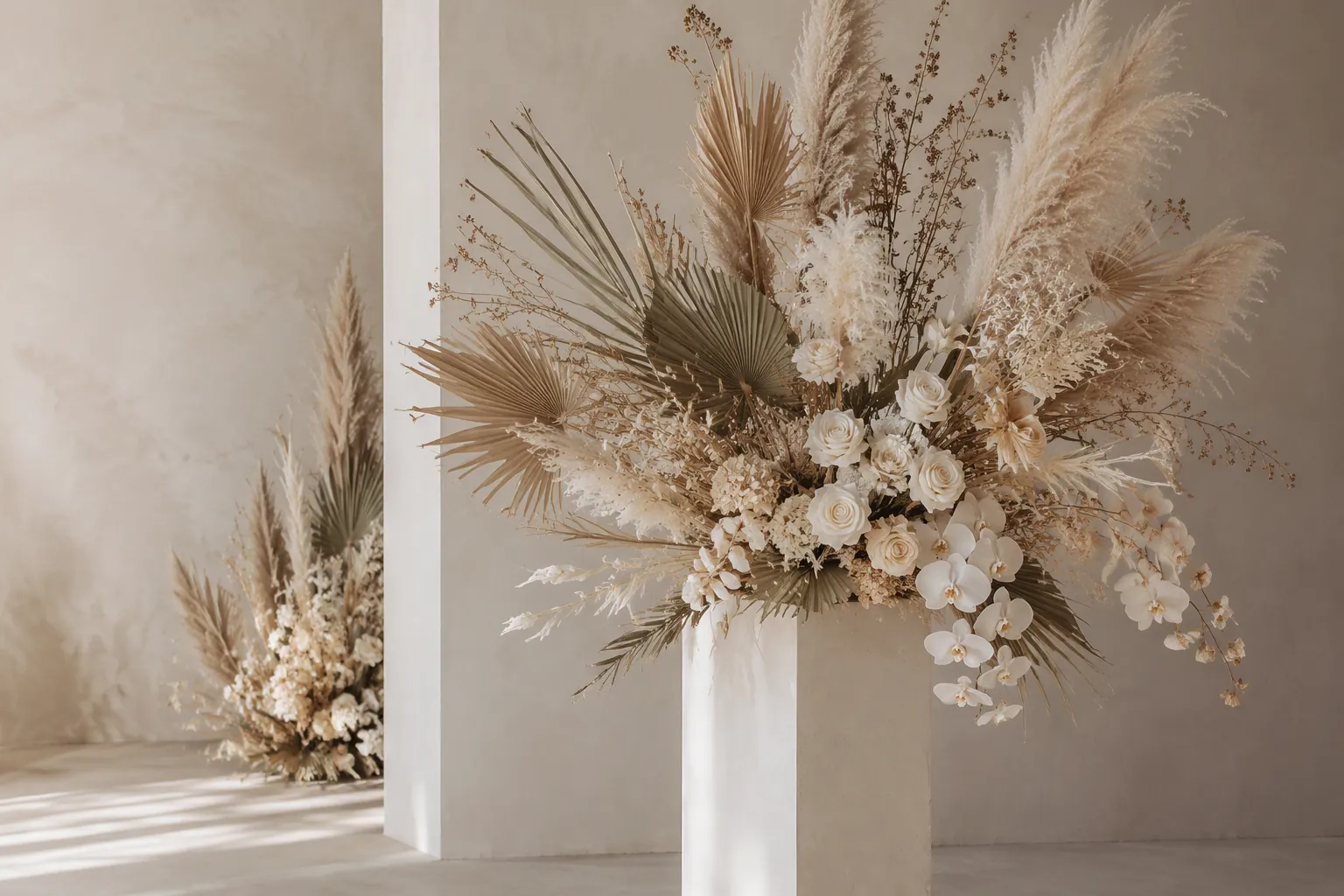
- Protea. Woody, prehistoric, and nearly indestructible. King protea gives you a focal bloom the size of a side plate; when the wedding is over it dries gracefully instead of rotting.
- Bird of paradise (strelitzia). Architectural orange and blue cranes that laugh at direct sun. A few stems carry a whole arrangement; leaves double as structure.
- Tropical foliage: monstera, palm, ti leaf, fern. Not a flower, but the backbone of heat proof design. Foliage provides volume at a fraction of the cost of blooms and is the last thing in the room to wilt.
The tolerance table
Ratings assume an outdoor event day in 28–35°C heat with intermittent direct sun: ceremony through reception, roughly eight hours.
| Flower | Tolerance | Field notes |
|---|---|---|
| Phalaenopsis orchid | Excellent | Hours out of water without visible stress; the default tropical workhorse |
| Anthurium | Excellent | Waxy spathe shrugs off heat; strong modern silhouette |
| Protea | Excellent | Woody stem; dries beautifully after the event |
| Bird of paradise | Excellent | Built for full sun; heavy heads need structural support in tall designs |
| Heliconia | Excellent | Lobster claw bracts in red, orange, pink; dramatic at scale |
| Cymbidium orchid | Very good | Hardier than most orchids; excellent for buttonholes and corsages |
| Hibiscus | Very good | Individual blooms last a day: perfect for the event itself, not the day after |
| Zinnia | Good | Summer field flower; cheerful, cheap, surprisingly tough |
| Garden rose (strong stems) | Good | Choose thick stemmed varieties; keep shaded and hydrated until the last moment |
| Dahlia | Borderline | Handles warmth, not blazing sun; late day ceremonies only |
| Hydrangea | Poor | First to collapse without constant water; indoor use only in hot climates |
| Gardenia | Poor | Bruises brown on contact; glorious scent, terrible traveler |
| Peony | Poor | Blows open and sheds in heat; substitute garden roses outdoors |
Field note, the hibiscus caveat
Hibiscus is the one tropical bloom with a genuine timer: each flower opens for a single day. That's fine, your wedding is a single day, but don't expect to preserve the bouquet, and confirm your florist is cutting them the morning of, not the week before.
The second string
Beyond the starting five, a deeper bench fills out color and texture. Heliconia brings hanging lobster claw forms in carnival colors. Cymbidium orchids survive buttonhole duty better than almost anything. Zinnias: a summer garden staple, not a tropical: handle heat with surprising grace and cost almost nothing. And garden roses, the usual temperate suspect, can work outdoors if you specify thick stemmed varieties, keep them shaded, and accept that they'll open faster than they would indoors.
Flowers to keep indoors
Be honest with yourself about which flowers are fixed, then negotiate the conditions. Hydrangeas, gardenias, peonies, sweet peas and lily of the valley all belong in air conditioning. If your heart is set on them, the standard workaround is a split design: heat proof tropicals and foliage for the outdoor ceremony, the fragile favorites appearing only at an indoor reception. You get both, and neither dies on camera.
Choose species built for the conditions, and heat stops being a risk. It becomes the reason the flowers look this good.
Pl. 01, working noteWorking with your florist in a hot climate
Five habits separate weddings whose flowers last from weddings whose flowers don't:
- Use potted plants at the ceremony. Living orchids, palms and ferns in containers are immune to cut flower stress, can be repositioned between ceremony and reception, and go home with someone afterward.
- Keep bouquets in water until the aisle. Assign someone (a bridesmaid, the coordinator) to vase duty between photo blocks. Twenty minutes back in water resets a bouquet completely.
- Buy local and in season. At a tropical destination, local blooms skip the freight and cold chain, which is why they're both cheaper and fresher. Importing peonies to the equator is paying a premium for a flower that will punish you for it.
- Schedule setup late. Push floral installation as close to guest arrival as the venue allows. Every hour in the sun is an hour off the flowers' evening.
- Plan water at the altar. Ceremony arrangements should be designed in water filled vessels or foam, never dry wired to a structure in full sun.
Frequently asked questions
Orchids, anthurium, protea, birds of paradise and heliconia are the most reliable. All five tolerate heat and humidity for a full event day, need little water once arranged, and hold their shape in photographs through to the last dance.
Only with strict limits. Hydrangeas are often the first flower to collapse without constant water, and peonies blow open and shatter in heat. If you must have them, keep them in air conditioned spaces, in water until the last possible minute, and out of direct sun, or ask your florist for a heat tolerant lookalike such as garden roses with strong stems.
Keep it in water until you walk down the aisle, assign a bridesmaid to return it to a vase between photos, and choose waxy or woody stemmed varieties: orchids, anthurium and protea can go hours out of water without visible stress.
Often yes. Local, in season blooms at a tropical destination cost less than imported temperate flowers, which carry freight and cold chain handling. In a temperate city the reverse is true: tropicals become the premium import.
No. White phalaenopsis orchids and green monstera read as modern minimal; protea and palm suit bohemian styling; a single anthurium stem is a favorite of editorial florists. The palette and container decide the theme, not the species.