Trend forecasts are often written in January from a desk. This one is written from booking calendars: what working florists across three markets are being asked to build for 2027.
Wedding flowers move slowly, then all at once. The blush and eucalyptus template that dominated the late 2010s took years to fade; what replaced it is now clear enough to name. Seven currents run through 2027 bookings, and together they describe a shift in what couples want flowers to do: less decoration, more structure; less matching, more texture; less waste, more afterlife.
1. The deconstructed arch consolidates its win
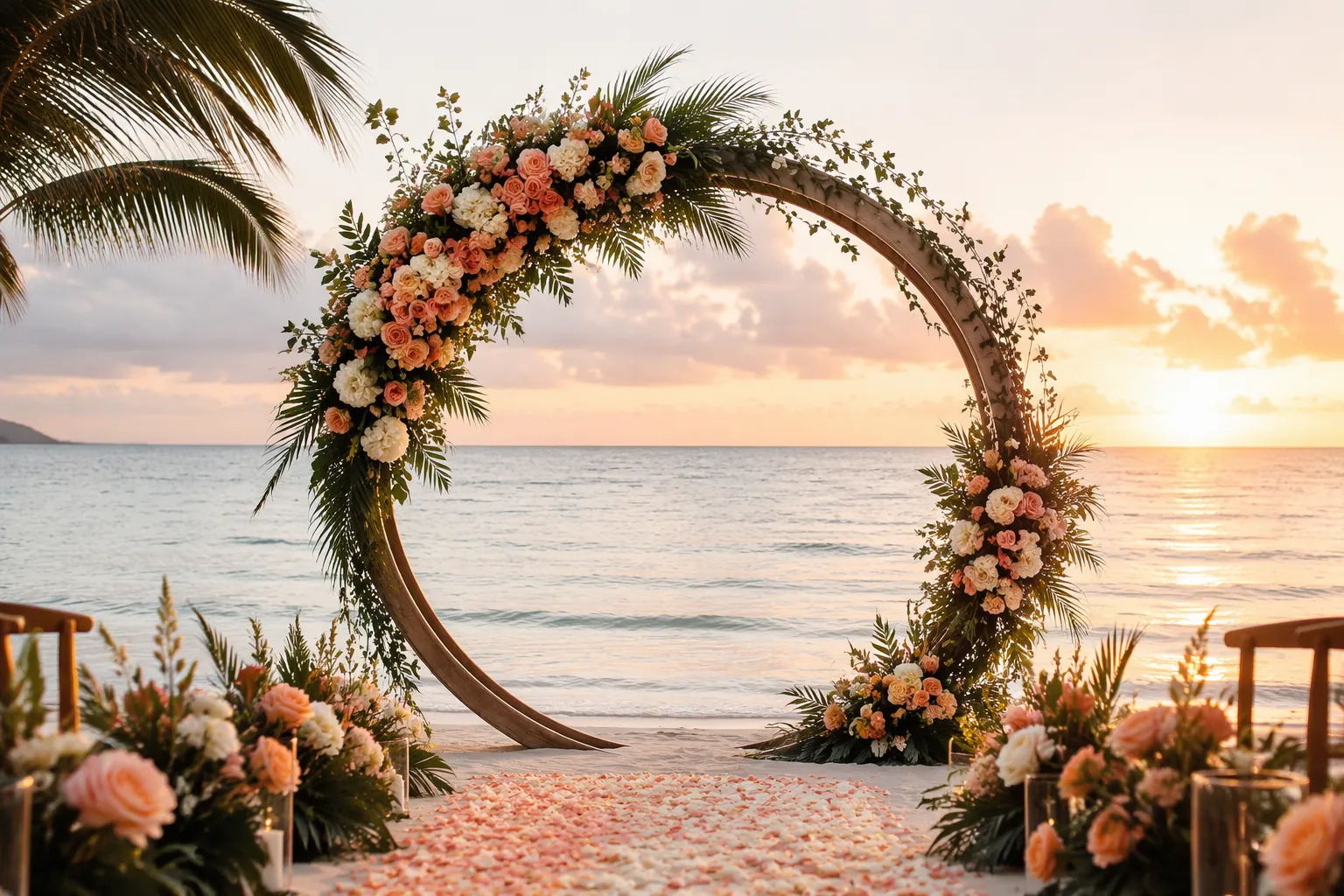
The asymmetric, offset ceremony arch (dressed heavily on one side, bare on the other) has gone past editorial novelty into mainstream request. Planners including Bridal Bliss's Nora Sheils have been flagging the non symmetrical shift for seasons; 2027 is the year it becomes the default in styling led markets. The practical consequence is pleasant: one sided dressing uses fewer stems than full coverage, so the budget stretches. See Pl. 02 for the shape by shape breakdown.
2. Foam free becomes a checkbox
Floral foam (the green block, a single use microplastic) is losing its place in the toolkit. Chicken wire, pin frogs, water tubes and reusable mechanics now carry arrangements that foam once held, pushed by green minded couples and, increasingly, venue policies. The trend counts beyond ethics: foam free mechanics favor the loose, gathered aesthetic currently in fashion, and they travel better in heat. Expect "do you work foam free?" to become as standard a vetting question as "are you available?"
3. Dried meets fresh. The mature mix
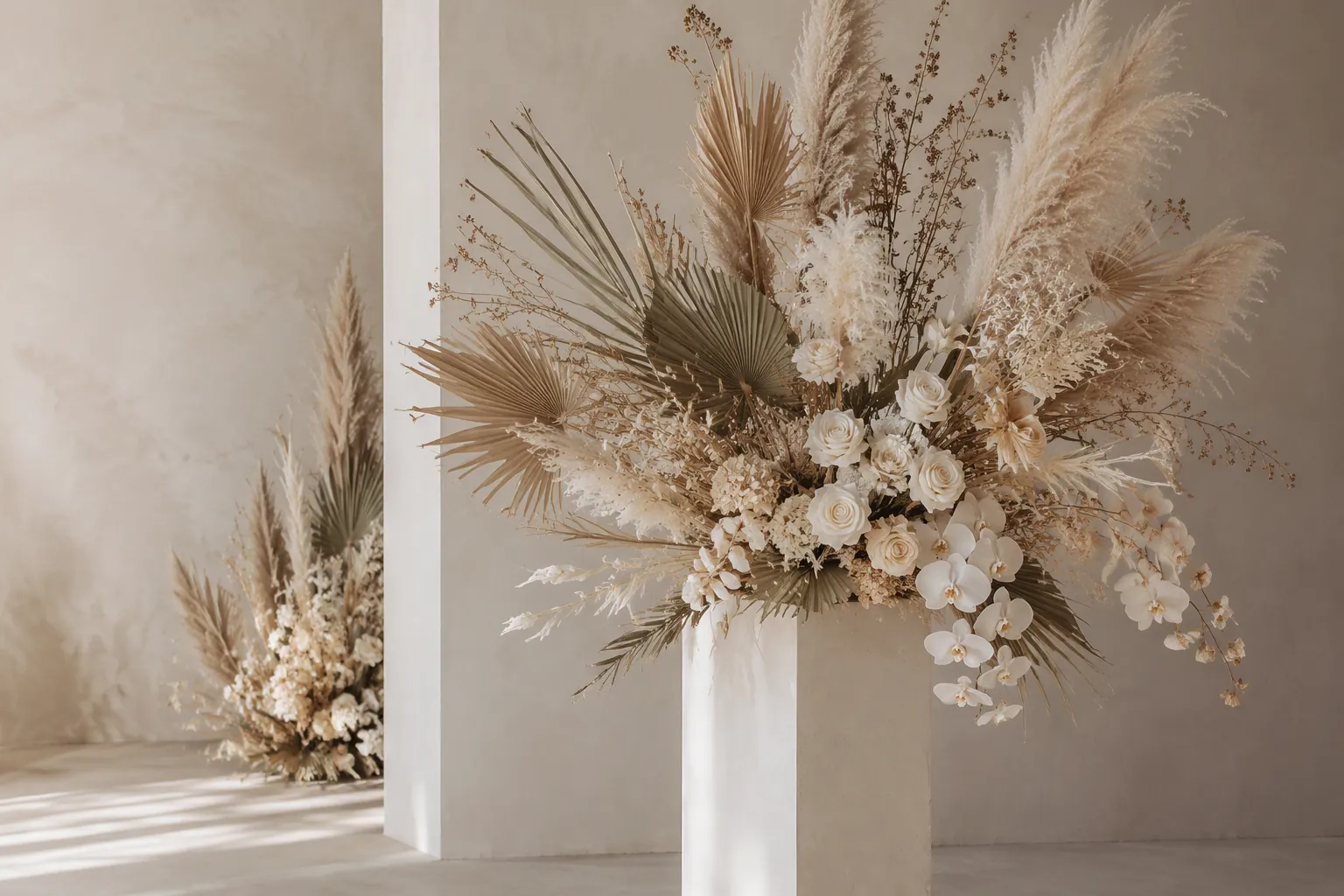
The all dried boho palette of a few years ago has settled into something more durable: predominantly fresh designs with dried and preserved elements woven in, palm fans, grasses, bleached ferns, preserved roses. The mix delivers texture fresh flowers can't, survives heat and travel, and gives couples keepsakes that don't die. It's budget friendly at the margins: dried elements buy volume without per stem fresh prices.
4. Bud vase tables replace the full centerpiece
Part economics, part aesthetic: clusters of three to seven bud vases per table, each holding a stem or two, at $75–$100 a table against $150–$250 for a full arrangement. The look reads as deliberate and collected (a tablescape of small decisions rather than one big one) and it lets florists showcase single perfect stems instead of bulk filler. See Pl. 03 for the budget math.
5. The single variety statement returns
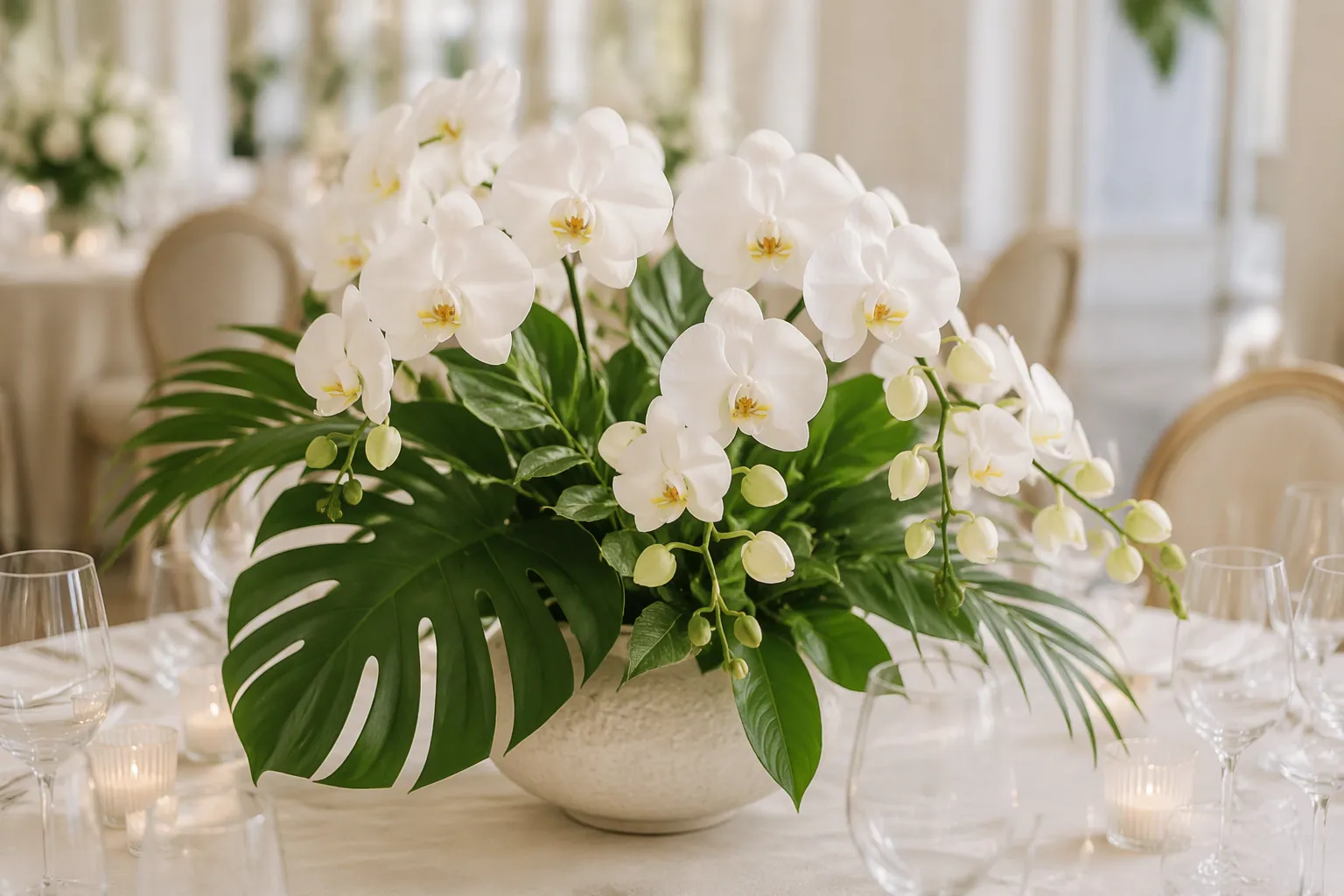
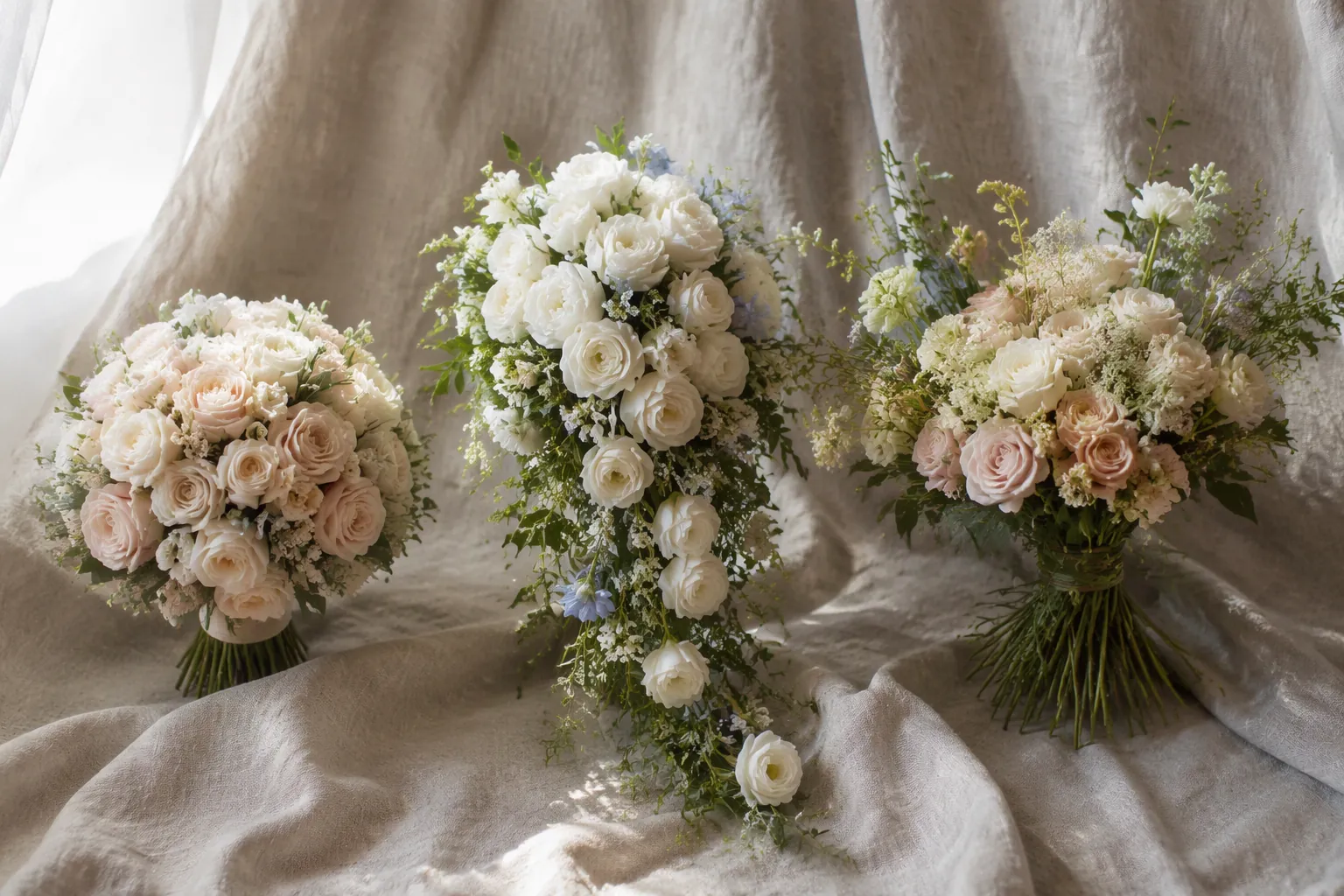
After years of maximalist mixing, discipline is fashionable again: one flower, en masse. A ceremony framed entirely in white phalaenopsis; tables carrying nothing but garden roses in a single tone; a bride with a mono botanical bouquet. The look photographs with graphic confidence and, perversely, can cost less than mixed designs. One variety, bought in volume, no palette engineering.
6. Potted plants move into the ceremony
Living orchids, palms, ferns and olive trees in containers, lining aisles and framing vows, then moving to the reception, then home with the couple or their families. It's the green trend with the clearest conscience: zero waste, genuine reuse, and immunity to the wilting that plagues cut flowers outdoors. Destination venues have done this for years; domestic weddings are catching up.
7. Palettes deepen
The all blush era is over. 2027 palettes run tonal but with real range, terracotta through rust to oxblood; butter through marigold to saffron; sage through olive to forest. Couples are choosing depth over matching, and the room reads richer for it. Marigold tones in particular are crossing over from South Asian tradition into mainstream palettes, see Pl. 07.
| Trend | What it looks like | Budget impact |
|---|---|---|
| Deconstructed arches | Offset frames, one sided floral dressing | Neutral to saving: fewer stems |
| Foam free mechanics | Wire, pin frogs, gathered loose style | Neutral: labor shifts, materials drop |
| Dried + fresh mix | Palm fans and grasses in fresh designs | Saving on volume |
| Bud vase tables | Clusters of small vessels, single stems | Saving: $75–100 vs $150–250/table |
| Single variety statements | One flower, en masse, one tone | Variable: volume buying helps |
| Potted ceremony plants | Living orchids, palms, olive trees | Neutral: reusable afterward |
| Dark tonal palettes | Terracotta to oxblood, butter to saffron | Neutral: palette, not product |
The 2027 couple doesn't ask "what flowers are in season?" They ask "what will this look like in our film, and where do the flowers go after?"
Pl. 08, working noteBooking timing for 2027
One practical note that outweighs every trend above: florists report peak season 2027 dates, May through October in the northern hemisphere, the reverse in Australia, booking 12 to 18 months out in major markets. Flower varieties can always be substituted; a good florist's calendar cannot. If 2027 is your year, the floral conversation starts now.
Frequently asked questions
The deconstructed, asymmetric ceremony arch continues its rise: offset frames dressed on one side rather than symmetrical structures. Planners report couples increasingly asking for the gathered, off center editorial look over balanced traditional designs.
Yes, but the application has matured: instead of all dried boho palettes, 2027 styling mixes dried and preserved elements, palm fans, grasses, bleached ferns, into predominantly fresh designs. The mix adds texture, survives heat, and lets couples keep pieces afterward.
Designing without floral foam (the single use microplastic block florists have relied on for decades) using chicken wire, pin frogs, water tubes and reusable mechanics instead. Pushed by waste concerns and venue policies, foam free technique is now a standard question couples ask when vetting florists.
All pampas everything, blush and eucalyptus sameness, and tightly matched single color palettes are receding. In their place: tonal palettes with real depth, mixed fresh and dried textures, and bolder single variety statements that feel chosen rather than templated.
Florists report peak season 2027 dates booking 12 to 18 months out in major US, UK and Australian markets. If you're marrying between May and October 2027, the floral conversation should start now: variety substitutions are normal, but the florist's calendar is not.
Sources & further reading
- Junebug Weddings: trend features and florist interviews
- The Knot: annual wedding trend reporting
- Style Me Pretty: editorial direction in current wedding design